Ibrahim Badi has left us.
Friday, November 21, 2014

Friday, April 4, 2014
Revenge
'Al-Shabab recruiter' shot in Kenya http://www.bbc.co.uk/news/world-africa-26845185#sa-ns_mchannel=rss&ns_source=PublicRSS20-sa
Sunday, February 10, 2013
The Art of Peace
This picture was posted on the Facebook wall of a friend of mine.

Morihei Ueshiba was the founder of Aikido, which can be translated as "The Art of Peace." Morihei Ueshiba is referred to by the practitioners of Aikido as O-Sensei, "The Great Teacher".
Learn his poems and quotes (doka) to help understand the ways of the peaceful warrior.
Thursday, May 17, 2012
The Three Visit Rule
We don’t entertain too many guests in my house. The guests we do have are usually frequent visitors, so in order to keep the visits light-hearted and simple, we adopted a policy of three visit hospitality to help people feel more at home as quickly as possible.

The Three Visit Rule is simple. When you visit us the first time, we will wait on you and serve you anything we have. the second time you visit, we will still serve you and begin to show you where we keep our refreshments. On the third visit, you’re on your own. If you’d like a beer, go to the fridge and help yourself. Hungry? You now know where the pantry is. After three visits, you are completely at home while visiting us.
I found that this rule is accepted 8000 miles away in villages on the coast of Kenya. One of my favorite restaurants was in Galu-Kinondo. Mama Isabel’s Roof Garden is a pub and café on the second floor of a store and rooming house across the street from the house on the beach which our team lived in while in country. Most afternoons, I would walk across the dirt street to have a stout and some chips. I soon became familiar and expected at Mama Isabel’s.
One hot afternoon, I climbed the stairs and was greeted by young Gloria, one of the servers. She welcomed me and bid me take a seat. After she busily finished with other patrons, she brought me a stout, apologizing for the delay. I dismissed her worries, telling her that I should have served myself for as many times as I had visited. I had her sit with me to rest for a few minutes while I shared with her the Three Visit Rule of my house. She told me that my rule wasn’t new to Kenya and quoted me the Swahili version:
“Mgeni siku ya kwanza mkaribisha vizuri, siku ya pili mpikia ugali na mboga, siku ya tatu mpe jembe aende shambani.”
It basically says that on the first visit, you will be served, that all is good. On the second day you will cook your own food of porridge and vegetable (from the garden.) By the third visit you’ll be given a plow to work in the garden for your own food. This third visit would be a stretch, even for the most lazy of hosts, especially in a gracious country like Kenya. But we get the big idea.
After three visits here, you are part of the household. Please. Make yourself at home. Come on in. Grab a beer. Have a seat and relax in front of the television for a few minutes. As soon as you’re finished with your beer, we have some chores for you.

I found that this rule is accepted 8000 miles away in villages on the coast of Kenya. One of my favorite restaurants was in Galu-Kinondo. Mama Isabel’s Roof Garden is a pub and café on the second floor of a store and rooming house across the street from the house on the beach which our team lived in while in country. Most afternoons, I would walk across the dirt street to have a stout and some chips. I soon became familiar and expected at Mama Isabel’s.
One hot afternoon, I climbed the stairs and was greeted by young Gloria, one of the servers. She welcomed me and bid me take a seat. After she busily finished with other patrons, she brought me a stout, apologizing for the delay. I dismissed her worries, telling her that I should have served myself for as many times as I had visited. I had her sit with me to rest for a few minutes while I shared with her the Three Visit Rule of my house. She told me that my rule wasn’t new to Kenya and quoted me the Swahili version:
“Mgeni siku ya kwanza mkaribisha vizuri, siku ya pili mpikia ugali na mboga, siku ya tatu mpe jembe aende shambani.”
It basically says that on the first visit, you will be served, that all is good. On the second day you will cook your own food of porridge and vegetable (from the garden.) By the third visit you’ll be given a plow to work in the garden for your own food. This third visit would be a stretch, even for the most lazy of hosts, especially in a gracious country like Kenya. But we get the big idea.
After three visits here, you are part of the household. Please. Make yourself at home. Come on in. Grab a beer. Have a seat and relax in front of the television for a few minutes. As soon as you’re finished with your beer, we have some chores for you.
Karibu.
Tuesday, April 10, 2012
The Sixth Precept
A warrior has not the luxury for excuses.

Another thing that distracts us is our passion for vindication. St. Augustine prayed, “O Lord, deliver me from this lust to always justify myself.” Such a need for constant vindication destroys our soul’s faith in God. Don’t say, “I must explain myself,” or, “I must get people to understand.” Our Lord never explained anything— He left the misunderstandings or misconceptions of others to correct themselves.
From http://utmost.org

A wise man once said that there is a vast difference between explaining our own actions and making excuses, especially when the excuses are aimed at turning our misdeeds into virtue. At that point, we are merely rationalizing our poor behavior.
Just a thought.

Another thing that distracts us is our passion for vindication. St. Augustine prayed, “O Lord, deliver me from this lust to always justify myself.” Such a need for constant vindication destroys our soul’s faith in God. Don’t say, “I must explain myself,” or, “I must get people to understand.” Our Lord never explained anything— He left the misunderstandings or misconceptions of others to correct themselves.
From http://utmost.org

A wise man once said that there is a vast difference between explaining our own actions and making excuses, especially when the excuses are aimed at turning our misdeeds into virtue. At that point, we are merely rationalizing our poor behavior.
Just a thought.
Monday, March 5, 2012
The Second Precept
A warrior is the epitome of controlled compassion. A warrior is the epitome of controlled violence.
"It is better to be patient than powerful.” (Proverbs 16:14)
“It is better to win control over yourself than over whole cities."
(Proverbs 16:32)
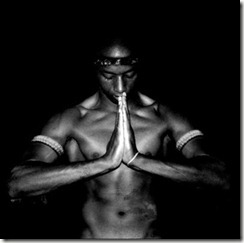
"It is better to be patient than powerful.” (Proverbs 16:14)
“It is better to win control over yourself than over whole cities."
(Proverbs 16:32)

Tuesday, December 13, 2011
The Meal
While I was attending the children's Christmas Show earlier this week, I overheard the conversation next to me. An acquaintance of ours is nursing his wife back to health after a terrific car crash and is having trouble making good meals for the family with the extra work on his routine. We are going to be part of a list of people who are making meals for the family while they work through the healing time.
 I'll gladly cook for them. It'll be a chance for me to get back into the kitchen after so many months of daily seeking meals and cooking for myself. I learned a lot in Kenya about the meal, the difference between a cook and a chef, and the ways that we all perceive food and eating. Preparing a meal for others will keep me mindful of the importance of this work.
We don't think about the time that is spent every day procuring food or preparing it. We have two choices. Quick and easy from boxes and cans, or time-consuming from raw ingredients. The former is the way that I used to operate in the kitchen. Even when I had bulk ingredients, they were prepared with the aid of canned broths or boxed sides. Now I am able to start from scratch with basic ingredients and put together a meal that looks simple but requires time and patience to achieve. This is the starting point for the way I'll cook from here on out.
The women, and some men, in Kenya devoted a better part of the day to the preparation of the meal. Ingredients were usually harvested from the shamba or purchased fresh at the kiosks in the village. Then the ingredients were carefully cut and chopped by hand without the aid of appliances found in our kitchens. The meals I prepare with the skills I picked up in Kenya don't have a lot of variety but if I add these methods to my other cooking, that will be remedied. It's more important now to table a simple meal that is valuable not in its sophistication but in the time and care that it took to prepare it.
With time, I will present these recipes adapted to my lifestyle in the States. Then it should be easy to present the other meals we've grown up with the same care that goes into the Kenyan meal. In the mean time, I will get ready for my turn to cook for the busy family down the road, and the meal they get from this house will have the freshest stuff I can find and will be prepared by hand with as much time as I can find.
Kufurahia chakula.
Monday, December 12, 2011
Chai Cha Jioni
 |
| Typical ingredients for coastal chai. |
Chai cha jioni is a regular activity in Kenya. It was a time to take a break from operations, relax for a few minutes, and unwind before the big meeting that was held every evening.
Quick Instructions
Get these ingredients: *
2 black tea bags
2 black tea bags
1/2 tsp ground ginger paste
A little milk
Sugar
One fairly large mug.
One fairly large mug.
Brew both tea bags in a mug as you would normally. Take the tea bags out.
Stir in a half tsp (or more if you like) of ginger paste until it is well dispersed in the tea.
Top off with milk (hot if possible) and then sugar to taste.
This is a quick way to reproduce a cup of the tea you were drinking on the Swahili Coast. Purists won't be so forgiving of the shortcuts but it's the most bang for a little time it takes.
If you want to try your hand at a pot of tea, this is as genuine as you can make it from your own grocer.
Here is the long version.
Gather these ingredients:
Loose black tea. Of course, Kenyan tea would be the most authentic but you may have to settle for any medium bodied black tea.
Ginger root. This is available in the produce section of almost any grocery store. Grate or mince the ginger finely, enough to make a pile in the palm of your hand- more if you really like the bite of ginger. It can be finely grated with the skin on since the pieces will be strained later.
Milk. The heaviest, creamiest milk you can find is best but if you really want to make a pot of Swahili tea, un-skimmed goat milk would be the best. Heat the milk until it is steaming lightly but don't boil it.
Raw sugar. Again, if you can find sugar milled from Kenya cane, that would be very authentic.
And, of course, one tea pot and a screen strainer.
Enjoy.
Here is the long version.
Gather these ingredients:
Loose black tea. Of course, Kenyan tea would be the most authentic but you may have to settle for any medium bodied black tea.
Ginger root. This is available in the produce section of almost any grocery store. Grate or mince the ginger finely, enough to make a pile in the palm of your hand- more if you really like the bite of ginger. It can be finely grated with the skin on since the pieces will be strained later.
Milk. The heaviest, creamiest milk you can find is best but if you really want to make a pot of Swahili tea, un-skimmed goat milk would be the best. Heat the milk until it is steaming lightly but don't boil it.
Raw sugar. Again, if you can find sugar milled from Kenya cane, that would be very authentic.
And, of course, one tea pot and a screen strainer.
- Brew the tea as you would any loose tea. Don't worry much about the temperature of the water. Boiling is good and make it just a little bit strong. Put the little pile of ginger in the tea as it is brewing. The amount will vary as you experiment and find the right flavor for your own taste.
- After the the tea has been brewing long enough, add the hot milk and stir it in well. The ginger will leave some oil residue on top of the tea. the milk will help that dissipate into the tea.
- Now add plenty of sugar to the tea and milk. Chai is usually very sweet.
- Pour the chai through a mesh strainer into the cups and serve with chapati.
This recipe is rough and there are so many variations that they couldn't be listed or described in one post. Take this and work your own art on it and come up with a chai that you can call your own.
Enjoy.
*I chose the items I did, Red Rose Tea, Spice World Ground Ginger, and Sugar in the Raw, not to promote any particular brand name loyalty, but for the fact that these items closely resemble the ingredients used on coastal Africa to prepare tea. Not to mention that with these items, you can make a pretty good cup of ginger chai that anyone else would drink without knowing you had cheated.
Sunday, December 11, 2011


Saturday, December 10, 2011
Dogs on the beach.

This picture gives you an idea of the typical appearance of the coastline below Mombasa.
Look in the background and you can see three boys moving their bicycles down the beach and a guy wearing a blue shirt just sitting on the berm watching us.
Then there's the obligatory appearance of the yellow dog. There's a yellow dog in every area we visited. There's a yellow dog in every place you'll ever visit.


Sunday, November 27, 2011
Mkokoteni

This isn't in order with the rest of the pictures that are on here. It happens to be in a folder that was started shortly after I arrived in Kenya.
These carts, mkokoteni in Swahili, are everywhere. They are a very common way for small businesses to get goods for their kiosks and dukas from Mombasa to the bush.
This particular cart isn't loaded anywhere near as much as it could be. Sometimes one cart would be piled up 6 feet high with goods and it would take 5 or 6 men and boys to push the thing.
The best part of the cart pushers' day was in negotiating the two approach ramps to the ferry in Mombasa. To get down to the ferry, the cart would try to escape by way of gravity on the way down the steep concrete ramp, with the pushers all forcing the back of the cart down to drag the ground. The back of the cart is equipped with a skid brake made of pieces of tire that will stop the cart by friction in case the puller lets go of the pulling bars. Once across the ferry, the pushers and the puller work the cart across the ramp back and forth, adjusting the course of each pass so that the cart worked its way up hill a little at a time just like a sailboat tacking across the wind.
In the scheme of the local transportation system on the Coast, these carts are the first level used to move goods in large quantities.
Friday, November 25, 2011
Djibouti

This is how I will forever remember Djibouti. The area I was in was hot, brown, and unfriendly.
There are many areas of this small country that are warm, beautiful, and welcoming, but I didn't see those. So this is the way I remember it.
Maybe the day will come when I can visit again with tourism in mind.
Speak the local English, not yours.
You must be positively understood in order to do your job. Just because the country speaks English doesn't mean that you speak the language. The English that you have been speaking all of these years is not the same as the English that you are hearing in country.
Listen to how the local people are speaking English and try to copy it. Speak slowly. Get rid of your Southern drawl. Get rid of your cool guy city accent. Speak the way the people around you are.
Listen to how the equivalent foreign language is constructed and form you sentences the same way. If the literal English translation of the local language puts words out of the order you are used to, then learn to spread that way. "What do you know about our language," may turn out to be "You know what of our language."
Speaking the local English will not sound macho. In fact, it may sound downright high-brow and liberal, but you have to do it. If you speak English the way you have been in the States, then no one will understand a word you are saying and then?
No one will want to work with you.
Deal breaker.
Listen to how the local people are speaking English and try to copy it. Speak slowly. Get rid of your Southern drawl. Get rid of your cool guy city accent. Speak the way the people around you are.
Listen to how the equivalent foreign language is constructed and form you sentences the same way. If the literal English translation of the local language puts words out of the order you are used to, then learn to spread that way. "What do you know about our language," may turn out to be "You know what of our language."
Speaking the local English will not sound macho. In fact, it may sound downright high-brow and liberal, but you have to do it. If you speak English the way you have been in the States, then no one will understand a word you are saying and then?
No one will want to work with you.
Deal breaker.
Wednesday, November 23, 2011
Smile and wave.
The simplest act you can perform as a CA Operator is to smile and wave.
If you can't form a genuine smile, just wave, but don't sit there like a typical high and tight hard-ass staring at people.
Don't force a smile, either. You'll look stupid. Stupid people become targets quickly.
And don't wave big like a kid at the circus. Simply raising you hand deliberately and moving it a bit will let those you are greeting know that you mean no harm.
When in doubt, say nothing.
Tuesday, October 25, 2011
Dear Swahili Coast
Dear Swahili Coast,
You will be hearing from me by way of these letters soon.
Only you will know what they mean to me, because only you were here with me these days.
People will, though, read them and possibly strive to know you as I did.
Signed,
Mzungu yako.
You will be hearing from me by way of these letters soon.
Only you will know what they mean to me, because only you were here with me these days.
People will, though, read them and possibly strive to know you as I did.
Signed,
Mzungu yako.
Wednesday, June 1, 2011
Madaraka Day
After decades of British rule, Kenya gained independence in 1963, on December 12th. To ensure a smooth turnover of power to the Kenyans, the British government supervised them in six months of self-rule. The first day of this self-rule was June 1st, earlier that year. This day every year is celebrated as the national holiday, Madaraka Day.
There was more dancing and singing as seen in the next video.

This celebration is held in many different levels all across Kenya, from homegrown activities as we observed to grand affairs in full military regalia. It was a great day to get to know the local population and it was an honor to have been invited to attend in uniform.
We were invited to attend a Madaraka Day celebration in Msambweni. There were many local dignitaries present. Mostly military, police, and local politicians. The ranking civilian for the local population was the District Commissioner- she was the one who invited us and used this day to allow us to switch from our civilian clothes to our uniforms.
All morning, there were activities and entertainment. Speeches were given by politicians, Imams, Ministers, and members of the military and police forces. Songs, dancing, and theatrical skits, and demonstrations were performed by local civic groups and school children.
 |
| A local politician addresses the attendees. Police chiefs and US Navy can be seen interacting in the foreground. |
 |
| These dancers are moving in a circle around musicians, preparing for their part in the celebration. Here is a short video of their dancing: |
There was more dancing and singing as seen in the next video.
| At one point a boxing match was held, complete with a referee in whites and the combatants' children serving as corner attendants. |

This celebration is held in many different levels all across Kenya, from homegrown activities as we observed to grand affairs in full military regalia. It was a great day to get to know the local population and it was an honor to have been invited to attend in uniform.
Subscribe to:
Posts (Atom)